
Chlor-Alkali & Chlorine Service
Chlor-Alkali & Chlorine Service
Halocarbon fluorinated oils, greases, and waxes are compatible with several parts of the chlor-alkali value chain, including chlorine gas service, sodium hypochlorite (bleach) production and handling, VCM (Vinyl Chloride Monomer) production, brine systems, sodium chlorate and hydroxide production, and any other high oxidizer environments. Halocarbon’s chlorine-safe oils and greases provide excellent lubricity, superior sealing, and the highest levels of safety from production, transportation, storage, and use.
Halocarbon lubricants offer unmatched chemical inertness, nonflammability, and thermal stability, making them exceptionally well-suited for use in a broad range of industrial equipment – from gauges and seals, to compressors and pumps. Several Halocarbon products are recognized in the Chlorine Institute Pamphlet #164, which provides safety guidance on reactivity and compatibility in chlorine and sodium hydroxide environments.
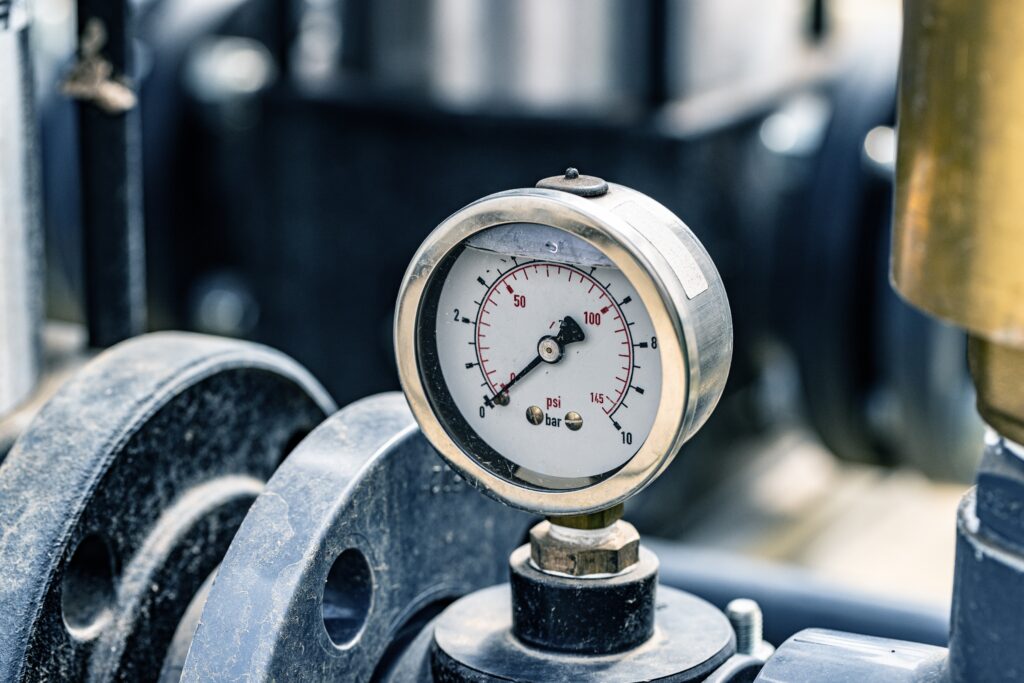
Instrumentation in Chlor-Alkali processes
In the chlor-alkali industry, instrumentation plays a mission-critical role in ensuring accurate chemical dosing, system monitoring, pressure regulation, and process automation. Devices such as differential pressure gauges and diaphragm seals are constantly exposed to aggressive chemicals in chlor-alkali processes that demand robust, chemically inert fill fluids for both safety and performance.
If the wrong fluid is used, it can:
- Cause false readings that lead to dangerous dosing or system mismanagement.
- React with the chlorine chemistry under oxidizing stress, generating heat, gas, or corrosive by-products.
- Compromise the sensor diaphragm, leading to rupture or internal leakage.
Halocarbon oils eliminate these risks by offering a stable, inert, non-reactive medium that ensures both measurement accuracy and personnel safety, which are key values in any chlor-alkali control application.
| Featured Halocarbon Oils | Key Features |
|---|---|
|
For ultra-low temps and highly sensitive instruments
|
|
|
Versatile option for general pressure applications
|
|
|
Excellent thermal and chemical stability for harsh or reactive environments
|
|
|
Heavier oils for high-temp processes or slower dampening response
|
These PCTFE-based oils are engineered to provide non-flammable, inert, low-compressibility performance — even when traditional oils fail
Not seeing what you are looking for? Contact us for our full portfolio of PCTFE and PFPE oils, greases, and waxes.
Chlor-Alkali Seals, Gaskets & Valves
In chlor-alkali facilities, critical equipment such as valves, pipe systems, and gaskets operate under demanding conditions. These components frequently encounter oxidizing chlorine chemistries, elevated temperatures, variable pressures, and tight tolerances.
Halocarbon lubricants are PCTFE or PFPE-based broad viscosity lubricants that are tailored for these rigorous environments, offering operational reliability, safety, and performance longevity.
Halocarbon greases for gaskets and valves deliver:
- Safer operating conditions under harsh chemical exposure
- Non-reactivity and stronger chemical resistance for safer and effective lubrication
- Increased uptime with less corrosion and degradation

| Featured Halocarbon Greases | Description | Notes |
|---|---|---|
|
• PCTFE Oil and a fumed silica thickener • NLGI 3 with lowest vapor pressure and wide temperature range (-20°C to +175°C) |
• Meets the requirements of United States Military Specification #MIL-G-47219A • Formerly: Halocarbon 25-5S |
|
|
• PCTFE Oil and a PCTFE thickener • NLGI 1 and softest grease for wide temperature range (0 to +135°C) |
• Recommended for use in applications that may react with silica, like sodium hypochlorite • Formerly: Halocarbon 25-10M |
|
|
• PCTFE Oil and a fumed silica thickener • NLGI 2 for lower temperature applications (-45°C to +95°C) |
• Recommended for lower temperature applications • Formerly: Halocarbon 28LT |
|
|
• PCTFE Oil and a PTFE/molybdenum thickener • NLGI 3 with wide temperature range (-20°C to +175°C) |
• Ideal as a thread sealant to prevent galling
|
|
|
• PFPE grease w/ PTFE-thickener (NLGI 2) |
• General-purpose fluorinated lubricant • Compare to: Krytox® GPL 205 |
|
*All PCTFE greases are non-flammable, moisture resistant and chemically inert
Not seeing what you are looking for? Contact us for our full portfolio of PCTFE and PFPE oils, greases, and waxes.
Krytox® is a registered trademark of The Chemours Company.
Chlor-Alkali Mechanical Seal Barrier Fluid
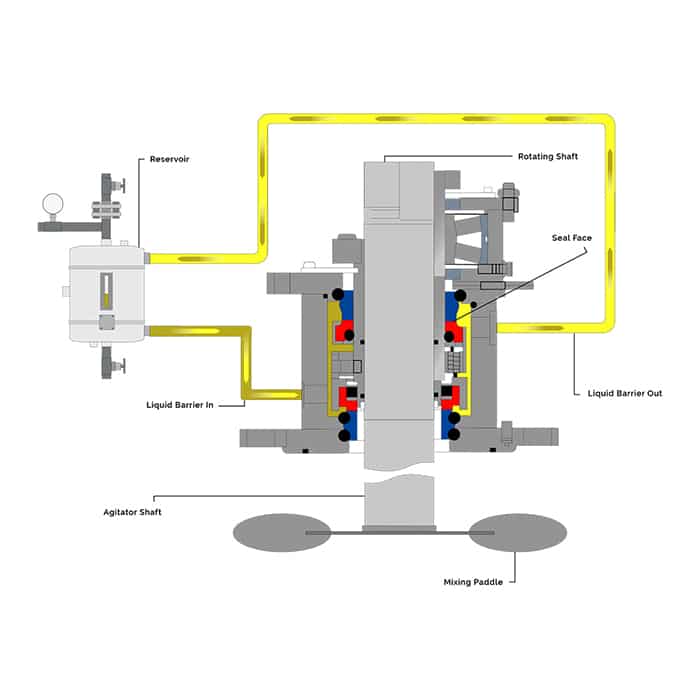
In chlor-alkali facilities, critical equipment such as the mechanical seals in pumps, compressors, and agitators are required to operate under demanding conditions. Mechanical seals frequently encounter oxidizing chlorine chemistries, elevated temperatures, variable pressures, and tight tolerances.
Halocarbon lubricants are PCTFE based broad viscosity oils that are tailored for these rigorous environments and formulated to lubricate and cool mechanical seal faces in both pressurized and unpressurized systems that employ API 682 seal arrangements for dual seals and tandem seals.
Using Halocarbon barrier fluids in a chlor-alkali environment
- Delivers safer operations as fluids will not react violently with chlorine, ignite, or form corrosive acids throughout wide temperature and pressure ranges
- Isolates chlorine from atmospheric moisture or air, preventing chlorine leakage into equipment internals or the environment
- Prevents vapor loss into the gas stream, preserving gas purity and equipment reliability.
Halocarbon Barrier Fluid Strengths
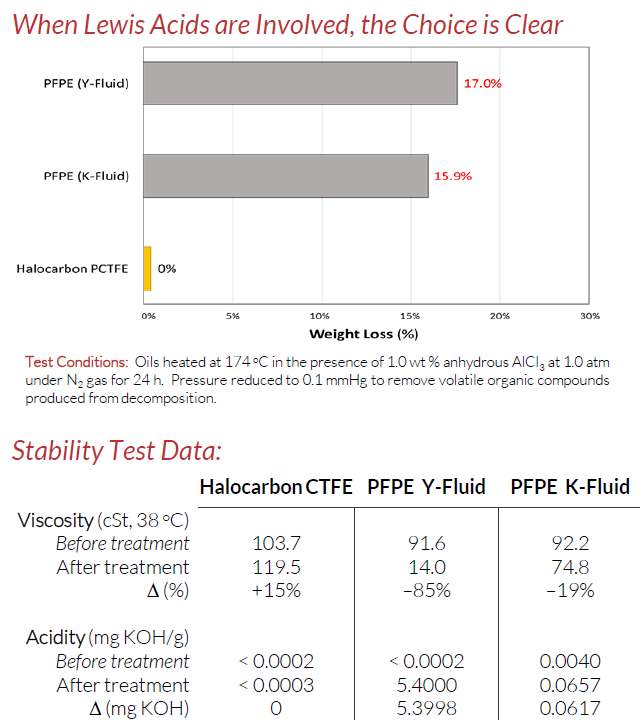
Halocarbon Mechanical Seal Barrier Fluids not only allow you to achieve higher safety and reliability standards but also provide an industry-proven solution to mitigate the risk of seal failures that could result in the exposure of hazardous process fluids to workers or the environment. Their PCTFE chemistry is less complex and more cost-effective than oils produced using conventional PFPE-based technology.
The inherent simplicity of PCTFE chemistry produces oils that do not contain any oxygen atoms in their chemical structure. This makes these oils more robust to attack by Lewis acids than other alternatives. In addition, these fluids contain no carbon-hydrogen bonds, allowing them to be used in the chlor-alkali process and some other hazardous process fluids, including the following:
| Hydrofluoric Acid (HF) | Sodium Hydroxide (NaOH) |
| Hydrochloric Acid ( HCl) | Potassium Hydroxide/Lye (KOH) |
| Sulfuric Acid (H2 SO4) | Hydrocarbon Solvents |
| Nitric Acid (HNO3) | Natural Gas |
| Phosphoric Acid (H3PO4) | Propane |
| Silicon Tetrachloride (SiCl4) | Petroleum |
| Bromine (Br2) | Aluminum Trichloride (AlCl3) |
| Oxygen (O2) | Boron Trifluoride (BF3) |
| Ammonia (NH3) | Arsenic Trifluoride (AsF3) |
| Featured Halocarbon Barrier Fluids | Description | Notes |
|---|---|---|
|
• Lower viscosity fluorinated barrier fluid designed for high face velocity centrifugal pumps |
• Prevent process leaks and maintain seal face temperatures in optimal operating range • Primarily suited for lower temperature applications |
|
|
• Medium viscosity fluorinated barrier fluid designed for lower face velocity applications such as rotary mixers and agitators
|
• Prevent process leaks and maintain seal face temperatures in optimal operating range • Primarily suited for higher temperature and higher face velocity applications |
|
|
• High viscosity fluorinated barrier fluid designed for temporary situations where the seal is leaking (out of alignment, worn out or broken) |
• Used to top off our other fluids as a temporary solution to minimize seal leakage until a maintenance shutdown can occur • Potential use in low face velocity or high temperature applications |
|
*All PCTFE greases are non-flammable, moisture resistant and chemically inert
Not seeing what you are looking for? Contact us for our full portfolio of PCTFE and PFPE oils, greases, and waxes.
Chlor-Alkali Pumps & Compressors
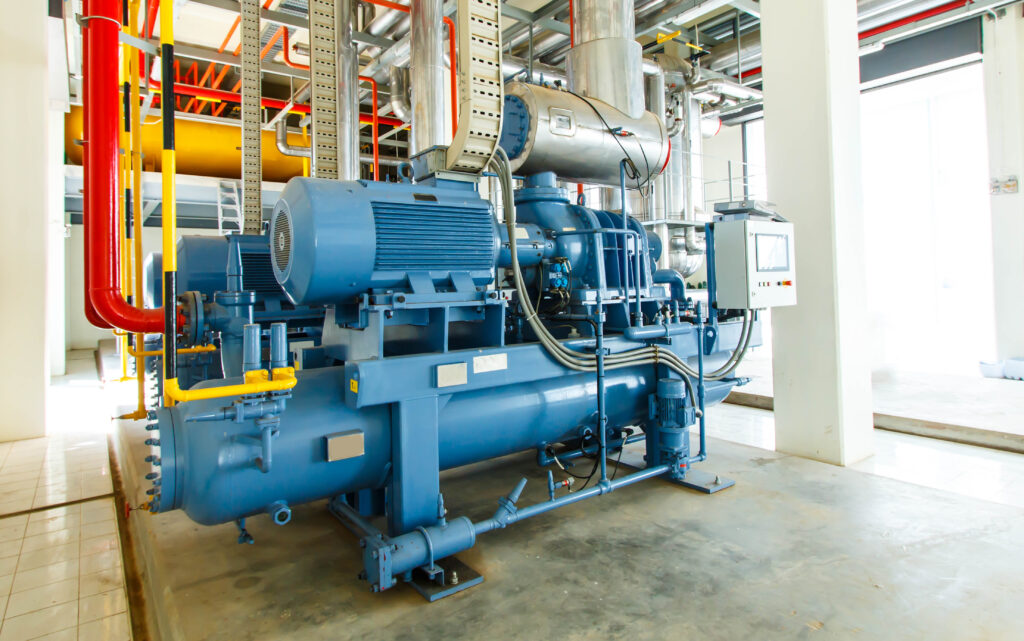
In chlor-alkali facilities, critical process equipment, such as pumps and compressors, operates under demanding conditions. These machines frequently encounter chlorine and oxidizers, elevated temperatures, variable pressures, and tight tolerances.
Halocarbon lubricants are PCTFE-based broad viscosity lubricants that are tailored for these rigorous environments, offering operational reliability, safety, and performance longevity.
Halocarbon oils used in these compressors and pumps:
- Will not react with chlorine, enabling safe operations in harsh environments
- Provide excellent lubrication and friction reduction with no oxidation risk
- Deliver longer uptime and not degrading into corrosive compounds
- Have less susceptibility to elastomer compatibility issues and corrosion
| Featured Halocarbon Oils | Description | Notes |
|---|---|---|
|
• Lower viscosity fluorinated PCTFE Oil for lower operating temperatures (-20°C to +150°C) |
• Excellent compressor lubrication, especially for valves and as barrier fluid |
|
|
• Low to Medium viscosity fluorinated PCTFE Oil for mid-range operating temperatures (-10°C to +170°C) |
• Excellent compressor lubrication, especially for gear trains |
|
|
• Medium viscosity fluorinated PCTFE Oil for higher operating temperatures (0°C to +180°C) |
• Excellent compressor lubrication, especially higher temperatures and high-load valves |
|
|
• High viscosity fluorinated PCTFE Oil for lower operating temperatures (+10°C to +200°C)
|
• Excellent compressor lubrication, especially very high temperatures
|
|
*All PCTFE greases are non-flammable, moisture-resistant, and chemically inert
Not seeing what you are looking for? Contact us for our full portfolio of PCTFE and PFPE oils, greases, and waxes.